
Every child deserves to feel safe, valued, and loved.
Yet for many children who enter foster care, those basic needs have not always been met. Experiences such as abuse, neglect, family instability, loss, or exposure to violence can leave lasting emotional wounds. While not every child who experiences trauma develops Post-Traumatic Stress Disorder (PTSD), many carry the effects of trauma long after the difficult circumstances themselves have ended.
National PTSD Awareness Month serves as an opportunity to better understand the impact of trauma—and to recognize the powerful role that relationships play in healing.
Trauma Changes More Than Memories
When people hear the term PTSD, they often think of combat veterans or adults who have experienced significant life events. However, children can experience trauma differently.
For children, trauma may affect emotional regulation, behavior, learning, trust, self-esteem, and relationships. Some children may become withdrawn and anxious. Others may act out, struggle in school, or have difficulty forming healthy connections with adults.
What often looks like defiance, anger, or indifference can actually be a child’s attempt to cope with experiences they were never meant to carry alone.
The good news is that trauma does not have to define a child’s future.
Healing Begins with Safe, Stable Relationships
Research consistently shows that one of the most important factors in helping children recover from trauma is the presence of safe, caring, and consistent adults.
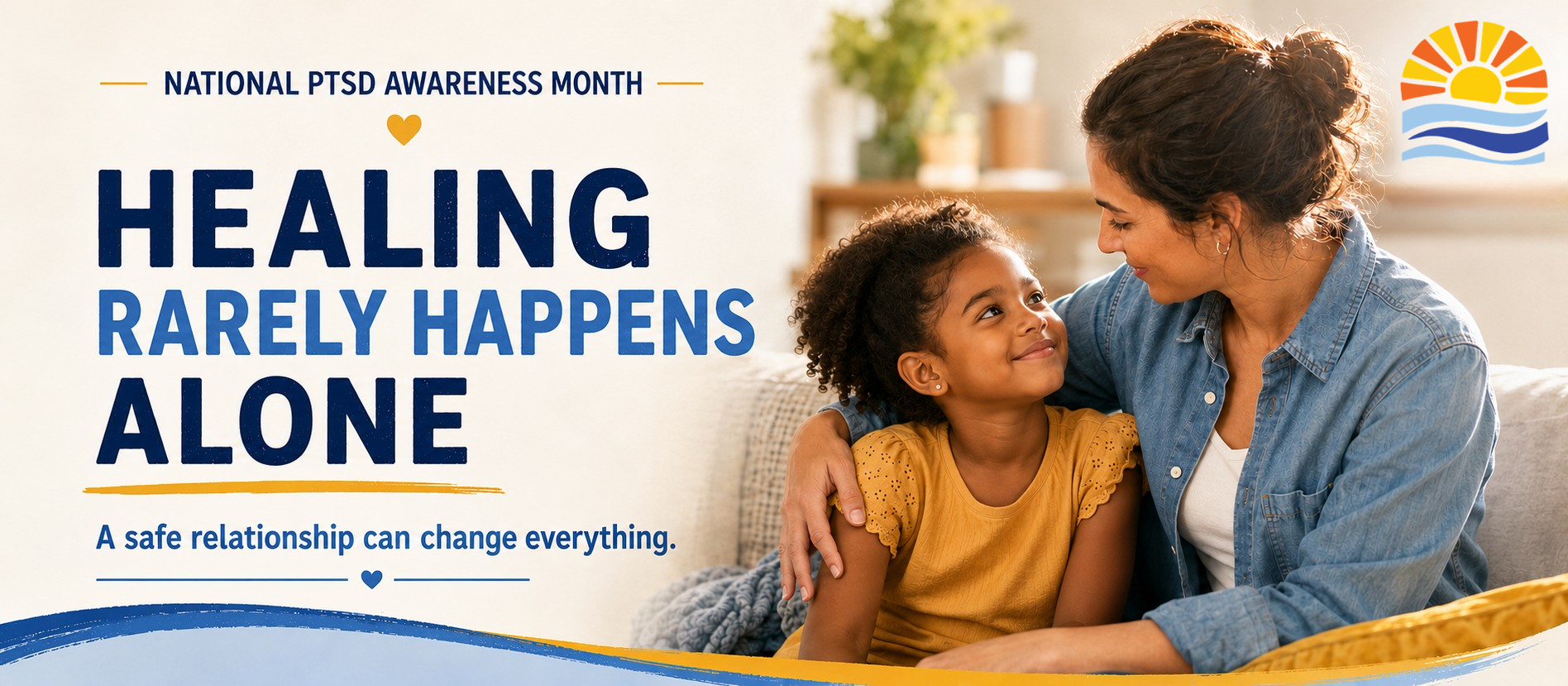
Healing rarely happens in isolation.
It happens when a child discovers there is someone who listens. Someone who keeps their promises. Someone who shows up day after day, even when trust takes time to build.
For children who have experienced uncertainty, consistency becomes a form of healing. A stable home, a trusted mentor, a foster parent, a teacher, a coach, or a caring volunteer can help restore a child’s sense of safety and belonging.
These relationships communicate a powerful message:
You matter. You are not alone. Your story is not over.
The Importance of Community
At Sunnybrook, we believe that children heal best when they are surrounded by a community that supports both them and the families caring for them.
That belief is reflected in everything we do—from residential care and transitional living programs to our growing Foster Family Community initiative.
Foster parents are often asked to care for children who have experienced significant trauma. While their role is critical, they should never have to walk that journey alone.
By providing training, mentorship, resources, and ongoing support, we are working to create a community where foster families feel equipped, encouraged, and connected.
Because when foster families are strengthened, children benefit.
Hope Is Stronger Than Trauma
Trauma may be part of a child’s story, but it does not have to be the end of the story.
Every day, we see young people demonstrate incredible resilience. We see children learn to trust again. We see confidence replace fear. We see futures filled with possibility emerge from circumstances that once seemed hopeless.
Healing is not always quick, and it is rarely easy. But with patience, support, and meaningful relationships, recovery is possible.
This National PTSD Awareness Month, we invite you to join us in creating environments where children can experience safety, connection, and hope.
Because healing happens in relationships and every child deserves the opportunity to thrive.
How You Can Help
- Learn more about becoming a foster parent.
- Volunteer with Sunnybrook programs and events.
- Support our mission through prayer and financial giving.
- Share awareness about the importance of trauma-informed care.
Together, we can help children move beyond survival and toward a future filled with hope.